Different workflows.
The right level of help.
Tilt can do it.
Use known data to complete standardized forms and generate claim packets.
Complete it together.
Coordinate employee and HR contributions, signatures, and next steps.
Guide the way.
Help people navigate external portals with instructions and the information they need.
The challenge
Before building the solution,
question the premise.
In closed-lost opportunities since 2024 attributed to the missing claims capability. A business signal worth investigating.
I was handed a proposed claim-filing solution. Before designing it, I asked: were we solving the right problem, and was this the right solution?
The challenge was to determine what Tilt should actually build to help employees successfully file claims.
My role
Help define what we should build.
I combined product-design leadership with hands-on research, product strategy, and solution exploration. Working with Product, Engineering, and our Leave and Compliance teams, I helped turn customer needs and ecosystem constraints into a clearer product direction.
My contribution spanned questioning the initial premise, exploring alternatives, prototyping, and guiding cross-functional decisions.
The approach
Check the claim behind the claim.
Competitive research, customer conversations, and analysis of state, carrier, employer, and internal workflows revealed there was no universal way to file a claim. The path could involve a PDF, an external portal, or several people coordinating behind the scenes.
Reduce filing friction wherever submission happens.
We changed the definition of the product to build.
The problem stayed the same.
The solution didn’t.
Each exploration tested where Tilt’s knowledge could be most useful—and exposed a constraint that shaped our next decision.
01 / Scale what already worked.
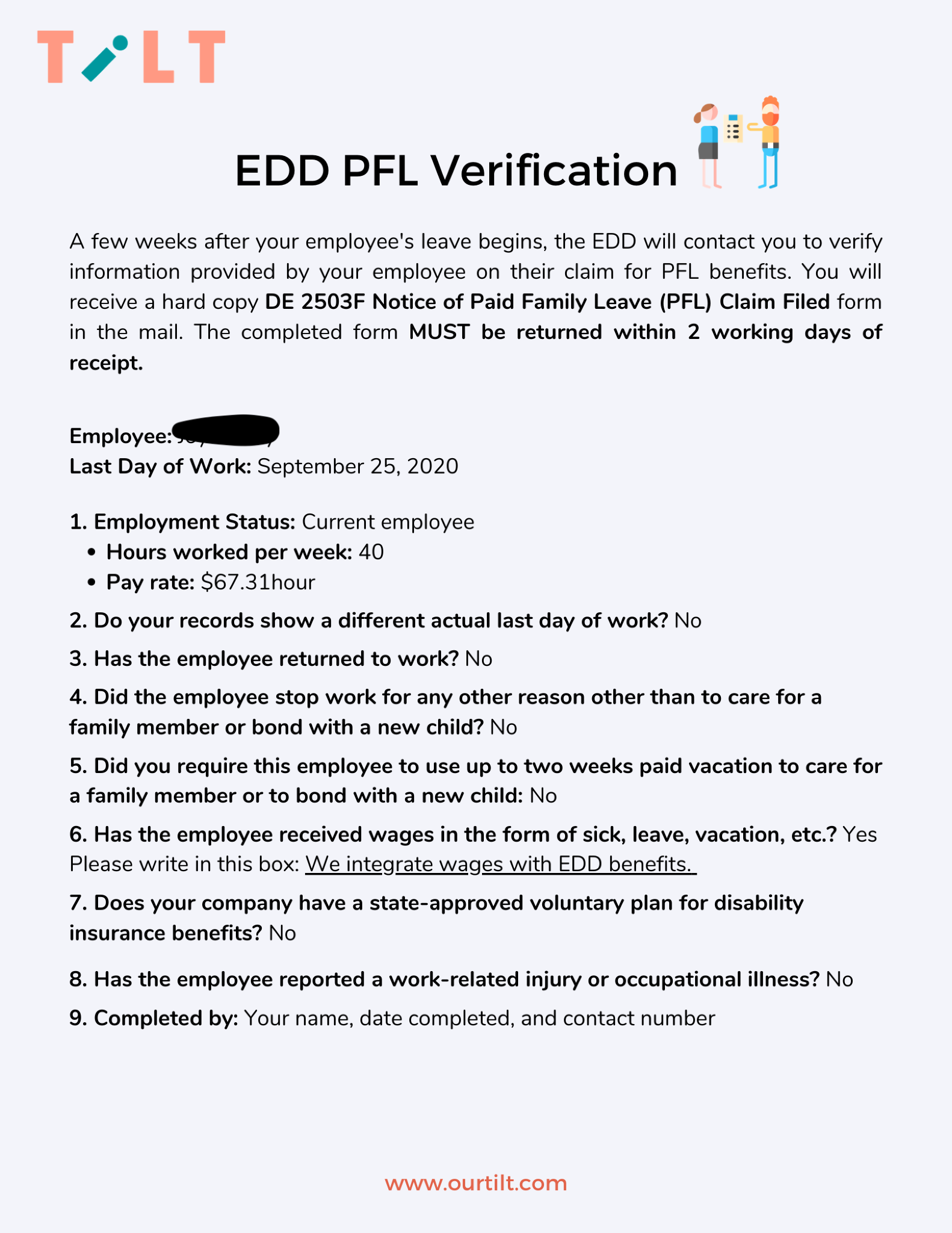
Tilt’s Leave Specialists already assembled personalized guidance by hand. Could we generate that help using information Tilt already knew?
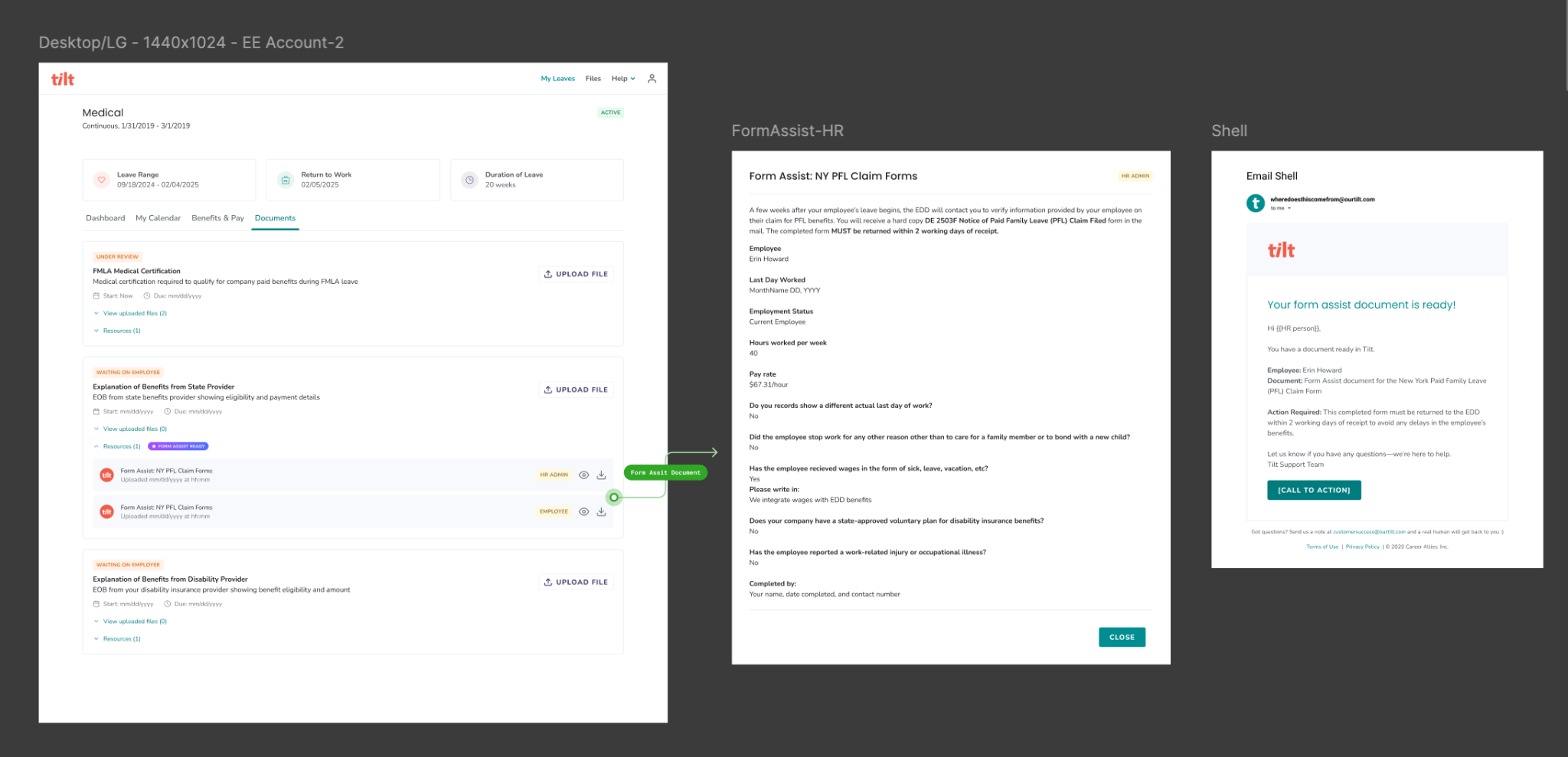
What we learned: Generating the guide could reduce manual effort. But people still had to carry information between Tilt and the system where they were filing. Could we bring the help to them instead?
02 / Meet people where they are.
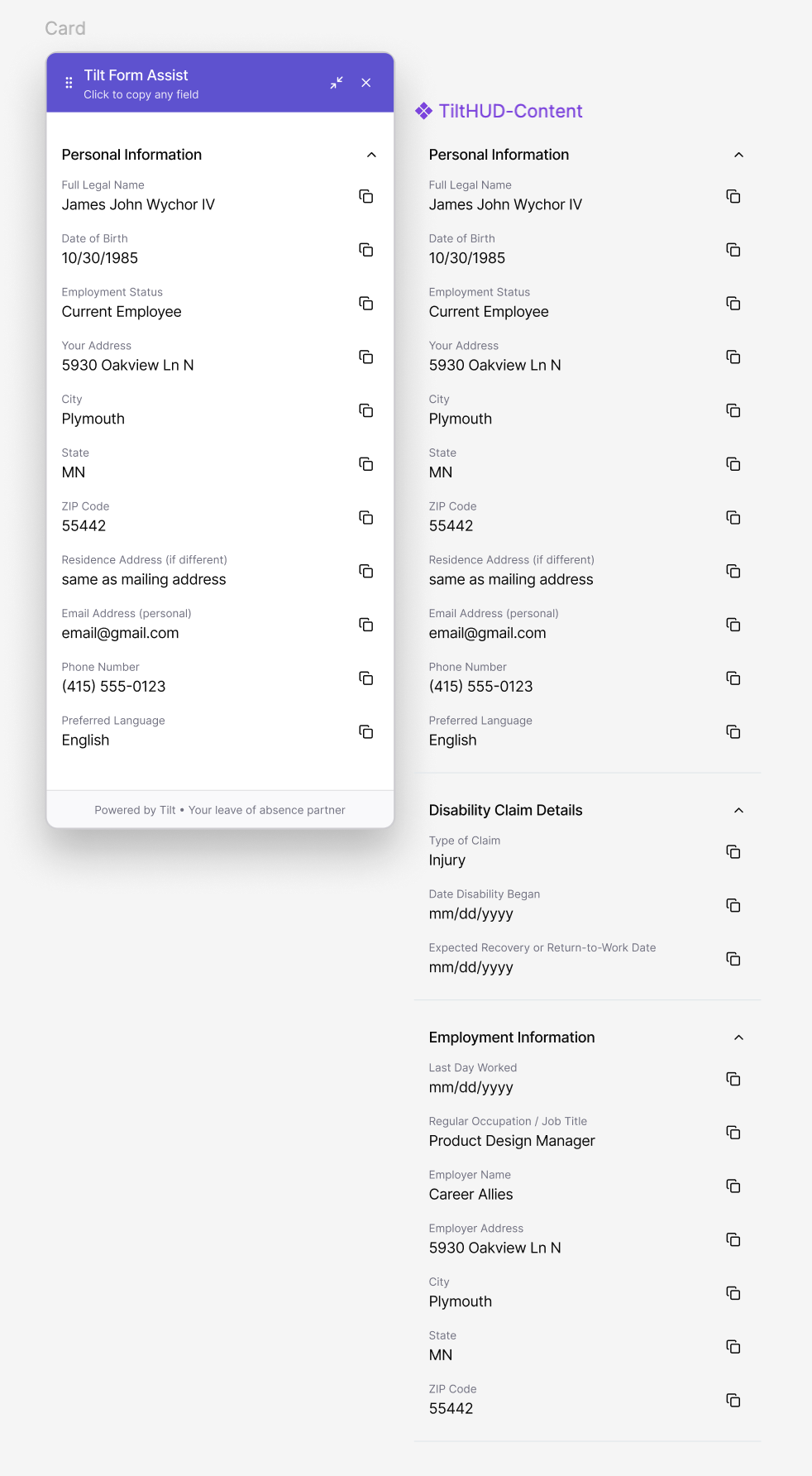
We explored a browser companion that put relevant information beside an external claim, with fields people could copy as they worked.
Discovery killed a promising idea.
Research revealed that many external portals restrict or block this kind of browser integration. The experience depended on systems we couldn’t control, so we stopped pursuing a direction that couldn’t reliably scale.
03 / Zoom out to the whole journey.
Filing involved more than completing a form: people needed to know where to submit, what to send Tilt afterward, and when another party was responsible. Those steps existed as disconnected To-Dos.
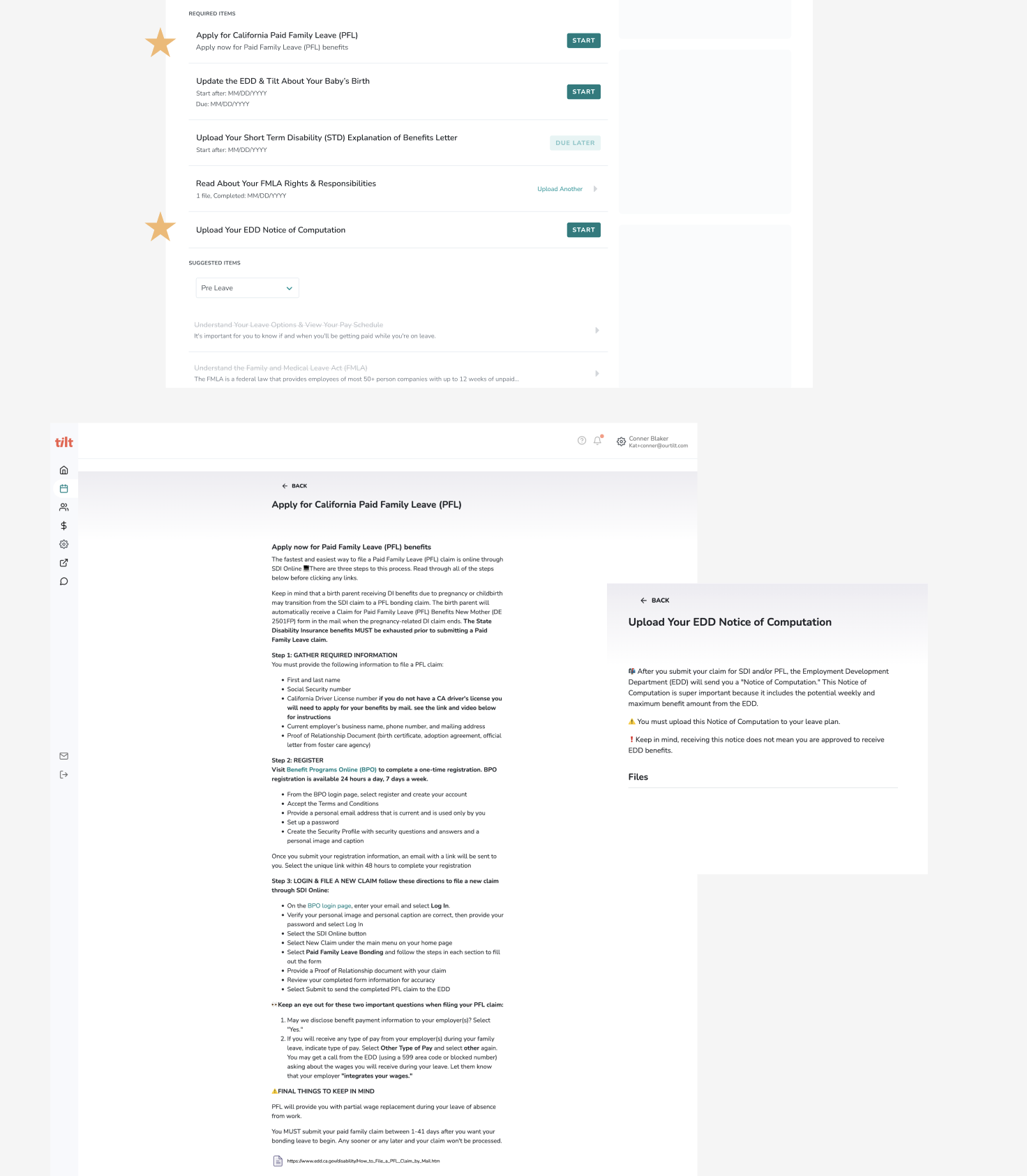
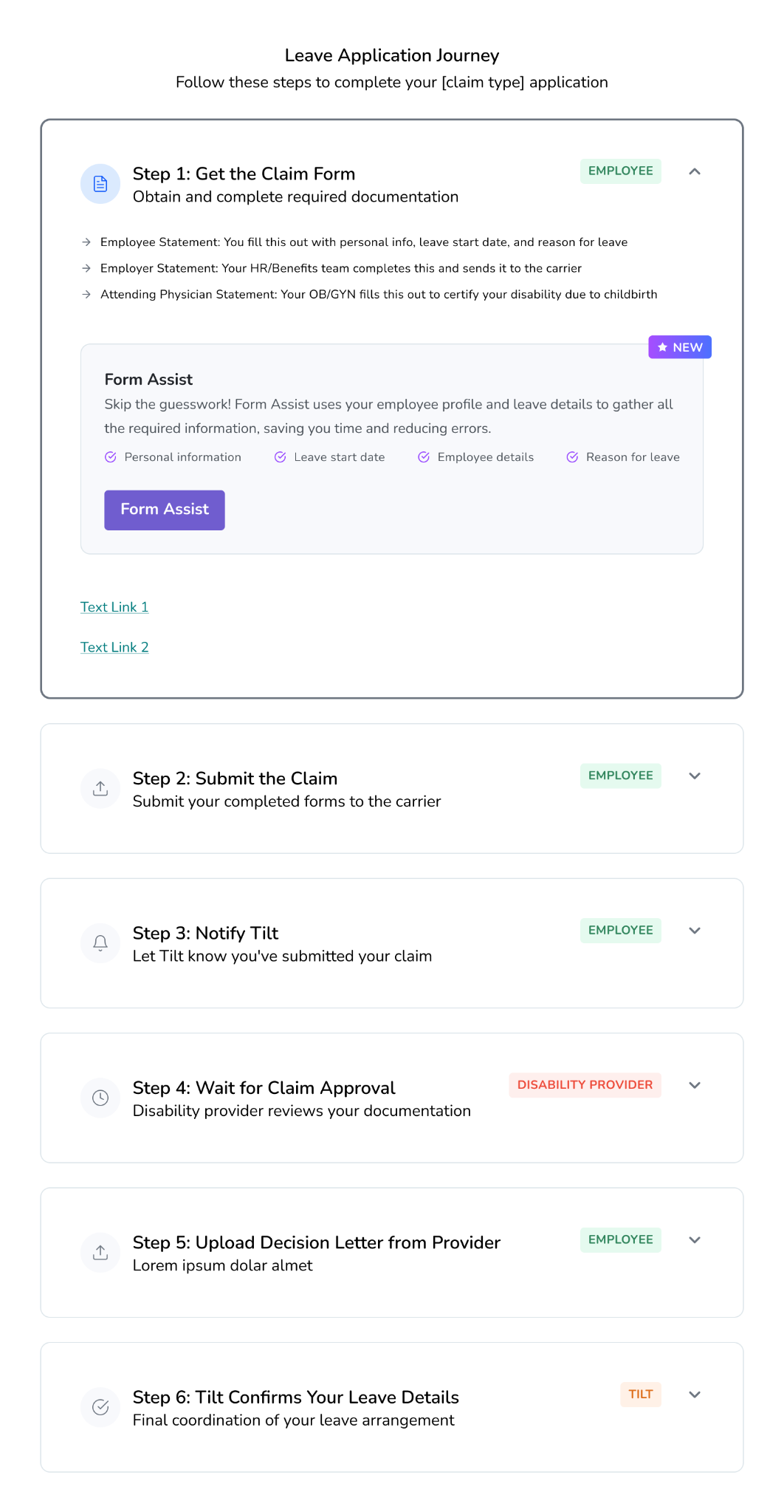
We explored connecting those tasks into one journey, clarifying the sequence and who owned each step.
What we learned: Connecting the steps clarified the process, but brought us back to the immediate question: “I have this form in front of me. What information do I put into it?”
Return to the need, with better context.
The original cheat sheet had been solving the right problem. What needed to evolve was how the help was created, delivered, and connected to the broader journey.
Same core need. Better context. Better execution.
The outcome
Bring Tilt’s knowledge
to the moment it’s needed.
The direction converged on Form Assist: use information Tilt already knows to help people complete claims outside Tilt, as an intentional step within the claim workflow. A contractor was brought in to build the experience.
We reached that direction by testing assumptions, abandoning an integration the ecosystem couldn’t support, and using each exploration to sharpen the next decision.
Sometimes the most valuable design work happens before you design the solution.